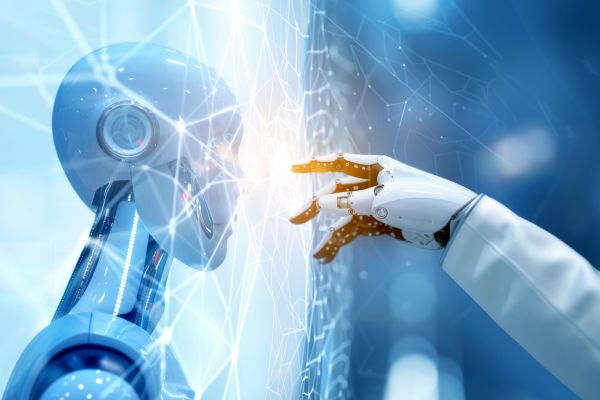
Artificial intelligence and robotics are no longer ideas waiting in the future. They are already here, quietly shaping how people work, learn, shop, travel, communicate, and even receive medical care. A robot may not look like the shiny metal figure people imagined decades ago. Sometimes, it is a warehouse machine sorting packages. Sometimes, it is a chatbot answering questions. Sometimes, it is an algorithm deciding which job applicant gets noticed first.
That is exactly why the ethical issues with AI and robots matter so much. These technologies are becoming part of ordinary life before society has fully agreed on how they should be used. The question is not only whether AI can do something. The deeper question is whether it should do it, who benefits, who is harmed, and who remains responsible when things go wrong.
Why Ethics Matters in Artificial Intelligence and Robotics
Technology often arrives with excitement. It promises speed, accuracy, convenience, and lower costs. AI can process huge amounts of information faster than any human. Robots can work in dangerous places, repeat tasks without getting tired, and support people in hospitals, factories, farms, and homes.
But efficiency alone is not the same as goodness. A system can be fast and still unfair. A robot can be useful and still intrusive. An AI tool can appear neutral while quietly reflecting the flaws of the data used to train it.
Ethics matters because AI and robots are not just tools sitting in the background. They increasingly make decisions, influence choices, and interact with people in emotionally and socially sensitive spaces. When machines begin to affect someone’s job, privacy, safety, reputation, or dignity, ethical thinking becomes essential rather than optional.
Bias and Unfair Decision-Making
One of the most discussed ethical issues with AI and robots is bias. AI systems learn from data, and data often carries the history of human behavior. If past decisions were unfair, incomplete, or influenced by stereotypes, AI may repeat those patterns in a polished, automated form.
This can happen in hiring, banking, education, policing, healthcare, and many other areas. For example, an AI system used to screen job applications may favor certain backgrounds if the training data reflects old hiring habits. A facial recognition system may work less accurately for some groups than others. A medical tool may give weaker predictions if it has not been trained on diverse patient data.
The danger is that automated decisions can feel objective even when they are not. People may trust the system because it sounds mathematical. Yet behind the result, there may be hidden assumptions, missing context, or unequal representation. Fair AI requires careful testing, diverse data, human review, and a willingness to question the system rather than blindly accept its output.
Privacy in a World Full of Sensors and Data
AI and robots often depend on collecting information. Smart devices listen, cameras observe, apps track behavior, and automated systems analyze patterns. In some cases, this data collection makes services better. In other cases, it quietly crosses a line.
Robots used in homes, workplaces, hospitals, or public spaces may gather images, voices, movement patterns, and personal details. AI tools can combine small pieces of data to create surprisingly detailed profiles of people. The ethical concern is not only whether data is collected, but whether people truly understand what is being collected and how it may be used later.
Privacy is connected to power. When organizations know more about individuals than individuals know about the systems watching them, the balance becomes uncomfortable. People may begin to change their behavior because they feel monitored. That is not a small issue. Privacy is part of personal freedom, and AI makes it easier than ever to weaken that freedom without obvious force.
Accountability When Machines Make Mistakes
When a human makes a bad decision, responsibility is usually easier to trace. With AI and robots, the picture becomes more complicated. If an autonomous vehicle causes an accident, who is responsible? The developer, the company, the data provider, the owner, or the machine itself? If an AI tool gives harmful medical advice, where does accountability begin and end?
This is one of the hardest ethical problems in AI and robotics. Many systems are built by large teams, trained on massive datasets, and updated over time. Even the people who create them may not always understand exactly why a system produced a specific result. This lack of transparency can make accountability feel slippery.
Still, society cannot allow responsibility to disappear simply because a machine was involved. Human beings design, deploy, approve, and profit from these systems. Clear responsibility must remain with people and institutions. Without accountability, trust in technology becomes fragile, and harm becomes easier to excuse.
The Problem of Transparency and Explainability
Many AI systems operate like black boxes. They take an input, produce an output, and offer little explanation in between. This may be acceptable when recommending a movie, but it becomes much more serious when AI is used for legal decisions, loan approvals, medical assessments, or student evaluations.
People deserve to understand decisions that affect their lives. If someone is denied a service, flagged as a risk, or treated differently because of an algorithm, there should be a meaningful explanation. Not every technical detail needs to be shared, of course. But the basic reasoning should not be hidden behind vague claims of complexity.
Transparency also helps experts identify mistakes. If no one can inspect how a system works, harmful patterns may continue for a long time. Explainable AI is not just a technical preference. It is a matter of fairness, trust, and democratic control.
Job Displacement and the Meaning of Work
Robots and AI systems can take over tasks once performed by humans. In some industries, this can reduce physical strain and remove people from dangerous work. In others, it can threaten livelihoods. The ethical question is not whether technology should ever replace labor. Change has always been part of economic life. The real concern is how society handles that change.
When automation increases profits but leaves workers behind, the benefits are unevenly shared. People may lose not only income, but also confidence, routine, identity, and community. Work is not just a paycheck for many people. It is part of how they understand their place in the world.
A responsible approach to automation should include retraining, education, fair transition plans, and honest communication. It is not enough to celebrate innovation while ignoring the people whose lives are disrupted by it.
Human Dependence and Emotional Attachment
Robots designed for companionship, caregiving, or education raise a different kind of ethical concern. People can form emotional connections with machines, especially when those machines are designed to speak warmly, respond personally, or appear caring.
This can be helpful in some situations. A social robot may comfort an elderly person. An AI tutor may encourage a struggling student. A chatbot may offer support when someone feels alone. But there is also a risk of emotional manipulation. Machines do not feel love, concern, or loyalty in the human sense, even when they imitate those emotions convincingly.
The ethical issue is whether people are being supported or deceived. Children, elderly people, and emotionally vulnerable users may be especially affected. Designers need to be careful about creating machines that pretend to have feelings in ways that blur reality too much.
Safety, Control, and Autonomous Weapons
Robotics becomes especially serious when machines can act in the physical world. Industrial robots, delivery robots, surgical robots, drones, and autonomous vehicles all carry safety concerns. A software error in a regular app may be annoying. A software error in a moving robot can injure someone.
The stakes become even higher with military robots and autonomous weapons. If machines are allowed to identify and attack targets without meaningful human control, the moral risks are enormous. Decisions about life and death require judgment, context, and responsibility. Delegating those choices to machines raises questions that cannot be solved by engineering alone.
Safety in AI and robotics must mean more than preventing technical failure. It must also include moral limits on where and how autonomous systems are used.
Robots, Care, and Human Dignity
Robots are increasingly discussed in healthcare, eldercare, and disability support. They can lift patients, remind people to take medicine, assist with movement, or provide basic companionship. These uses can be valuable, especially where human caregivers are overworked or resources are limited.
Still, care is not only a task. It is also a relationship. A robot may help with routine support, but it cannot fully replace human presence, empathy, and moral understanding. There is a risk that vulnerable people may receive machine care mainly because it is cheaper, not because it is better.
The ethical challenge is to use robots in ways that support human dignity rather than reduce people to problems that need managing. Technology should assist care, not strip it of warmth.
Who Gets to Shape the Future
Another important question is who gets to decide how AI and robots are developed. Too often, these technologies are shaped by a narrow group of companies, engineers, investors, and governments. Yet their effects are felt by everyone.
Ethical design should include more voices. Teachers, patients, workers, parents, disability advocates, artists, legal experts, and ordinary citizens all have something to say about how intelligent machines should fit into human life. The future should not be built only by those with the most money or technical power.
Public discussion matters because AI and robotics are social technologies, not just mechanical inventions. They reflect values. And if values are not discussed openly, they are quietly chosen by default.
Conclusion: Building Technology with Moral Imagination
The ethical issues with AI and robots are not simple problems with neat answers. They involve fairness, safety, privacy, responsibility, dignity, and power. They also require patience. Society cannot treat ethics as something to add after the technology is already everywhere.
AI and robotics can do extraordinary things. They can help doctors, support students, improve accessibility, reduce dangerous labor, and solve problems that once seemed too complex. But their value depends on how carefully they are designed and how honestly they are governed.
The goal should not be to fear intelligent machines or reject progress. The goal should be to build technology with moral imagination. That means asking difficult questions early, listening to the people most affected, and remembering that human life is not just data to be processed. In the end, the future of AI and robots will say as much about our values as it does about our inventions.